
2026 Baker’s Dozen Market Outlook by Fat Prophets
Good morning,
Sitting down to contemplate how the markets will move and change next year is always one of the highlights of our publishing calendar. Our line-up for next year sees many of the key themes that delivered in 2025 continuing into next year, but with a few notable exceptions. We have stayed away from politics, with the exception of renewing a wrong call this year that the Ukraine war will end sometime in 2026, which could have a profound impact on commodity markets. We have departed on consensus expectations around oil markets, but with some important caveats. We also kept away from politics with the US mid-term elections set to be held in November.
It is always difficult in ever-changing financial markets to determine where the landscape will be twelve months from today. However, without further ado, here are the top thirteen calls for 2026.
The US stock market makes new record highs during the first two quarters of the year. The growing wave of AI investment continues, in what is becoming the 3rd great industrial revolution. The First Industrial Revolution (late 18th to mid‑19th century) centred on Britain and roughly took place between the 1760s and 1840s, marked by the mechanisation of textile production, the use of steam power, the development of iron-making techniques, and the rise of the factory system. The Second Industrial Revolution (late 19th to early 20th century ) was characterised by large-scale steel production, widespread electrification, internal combustion engines, chemical industries, and new forms of mass production such as assembly lines. The 3rd industrial revolution really gets underway in 2026 with technological advances in humanoid and manufacturing robotics, alternative energy and storage, multi-agent and agentic AI.
The S&P500 rises well above 7,500. The Russell 2000 small/midcap index also pushes higher next year, rising above 3,000, outperforming the broader US market. Several corrections ensue next year as the markets advance is periodically checked by investors. But easier monetary policy from the Fed and the end of quantitative tightening – considerably loosen financial conditions. Earnings accelerate higher as consumers keep spending and economic growth holds together. Don’t fight the Fed. These factors, along with lower interest rates, underpin the bull market in 2026.
In Australia, the ongoing rally in resources stocks led by the major diversified miners provides one engine for Australia’s bull market as commodity prices rise. Another engine is delivered from the Banks and Financials. Rising bond yields boost net interest margins for the banks while technology drives costs down further. Domestic technology stocks also finally find a floor and stage a decent rebound rally. The ASX200 rises above 9,700 in 2026 as the bull market also continues.
The US bond market behaves in the first half of the year as weaker oil prices keep a relative lid on inflation, and yields remain contained. Dissent continues at the Federal Reserve under the final months of outgoing Chair Jerome Powell. However, further easing arrives when a new appointee assumes the Chair role and the Fed cuts at least one more time next year.
Cracks in the US bond market then begin to appear by the 2nd half of the year. Running the economy hotter than usual “carries a price” and inflationary pressures reignite in the 2nd half of the year. Bond vigilantes are back on the march as the US fiscal deficit widens and the national debt pile tops $40 trillion by the end of 2026. Longer dated yields on US treasury bonds begin to rise from about the 2nd or 3rd quarter. The yield on the US10yr goes well above 5%, while the US 30yr rises towards 6%. When “cracks” start to emerge in the bond market, rising longer-dated bond yields are the catalyst for one decent drawdown in stocks sometime next year.
De-dollarisation, currency debasement, and a collective realisation that money printing is a permanent fixture on the financial landscape weigh on the US dollar. Trade flourishes in other currencies. Nations increasingly settle with one another in US dollars and trade in their own currencies. The US dollar’s market share of global FX transactions and global reserves continues to decline. The US dollar resumes falling next year. However, the 2026 decline is not as deep as this year’s, but still, the Dollar Index takes out this year’s lows at 96.50 at some point in 2026 and falls towards 91 during the year.
Gold continues to do well next year. The ongoing trend of central bank buying gold to diversify away from FX reserves and financial assets continues. There is more determined buying in 2026 as other central banks and sovereign wealth funds join in. Global investors begin to join the dots, and more institutional and retail investors diversify into gold, which is increasingly seen as the ultimate hedge. Inventories held in ETFs continue to rise.
Gold, as a precious metal, is increasingly seen as an unencumbered asset with no liabilities (on the other side), that can be “held off the grid” while standing the test of time over thousands of years as a defense against inflation and geopolitical turmoil. Gold makes new highs above US$5000oz and A$7000oz, and in all the major/minor currencies. Some prominent forecasters start calling for US$10,000oz by year end.
Silver and platinum also make new highs throughout the year, as supply becomes increasingly tight amidst rising underlying demand for industrial applications. The PGMs are increasingly seen as rare metals with important uses in the AI rollout, key electronics, electric vehicles, and the coming wave of humanoid robots. The US government moves to restrict silver exports with a reclassification as a ‘rare metal’. Silver exceeds $75oz during the year, while platinum takes out the 2006 high at US$2200oz. Palladium also accelerates higher from current levels, being the laggard of the group.
Commodities finally enter a new bull market next year. Grains, metals, and even energy prices do better next year and surprise on the top side. With a weaker dollar, countries can utilize and deploy dollar reserves more effectively and into tangible resource assets. There is a collective realization that commodities are cheap relative to financial assets – and in many cases, scarce. The Bloomberg Commodity Index rises more than 12% during the year and eclipses 120.
Oil delivers a surprise, which starkly contrasts with current consensus forecasts of sharply lower prices and a supply glut. As supply floods the market, oil prices spike downwards and flush out the last of the few remaining bulls. Investors capitulate and become maximum bearish on the world’s largest commodity market. Oil prices put in a final bottom around this time and then commence climbing in a new cycle, which continues for a number of years. A contrarian buying opportunity then opens up in major global diversified energy stocks, which don’t take out their April 2025 capitulation lows. For value and contrarian investors, energy stocks tick many boxes.
Ukraine finally reaches a settlement with Russia. A huge rebuilding program gets underway to repair key assets, such as infrastructure, factories and homes. Following World War 2, many countries went through similar rebuilding cycles, including Japan and Germany. After WWII, commodity prices saw sharp increases due to pent-up demand, reconstruction needs, and disrupted supply, especially for essential materials such as steel and copper and as the computer age got underway in the 1950s/60s.
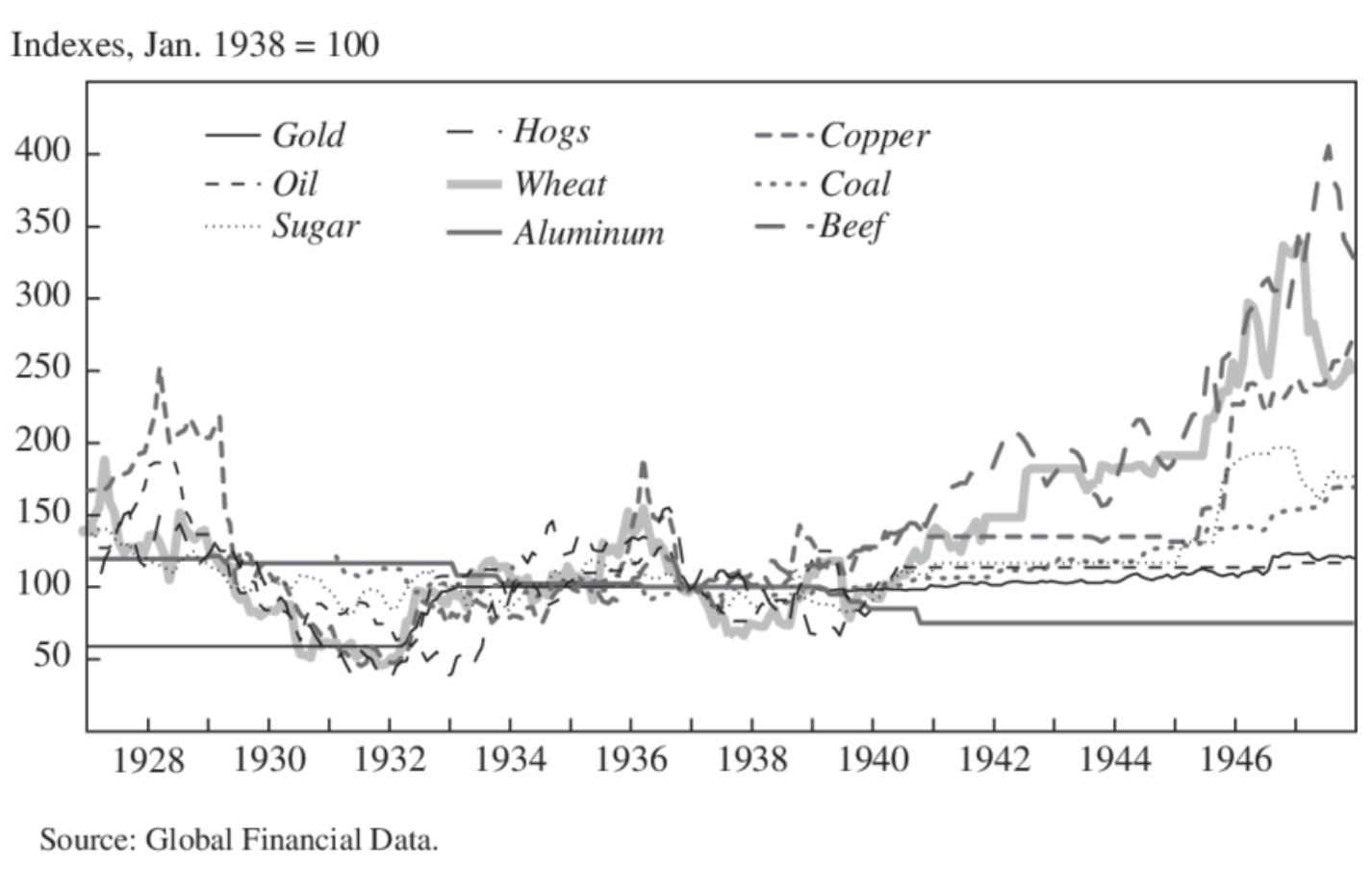
The bill to replace all of Ukraine’s infrastructure runs into many hundreds of billions, requiring an enormous amount of materials and resources, including copper, base metals, steel, and timber. The list goes on. Commodity demand continues to rise around the world. Within the US, a defining phase in the 3rd industrial revolution really gets underway with the rollout of AI. India’s economy continues to develop with the development of new infrastructure, increasing urbanisation, all requiring ever more resources.
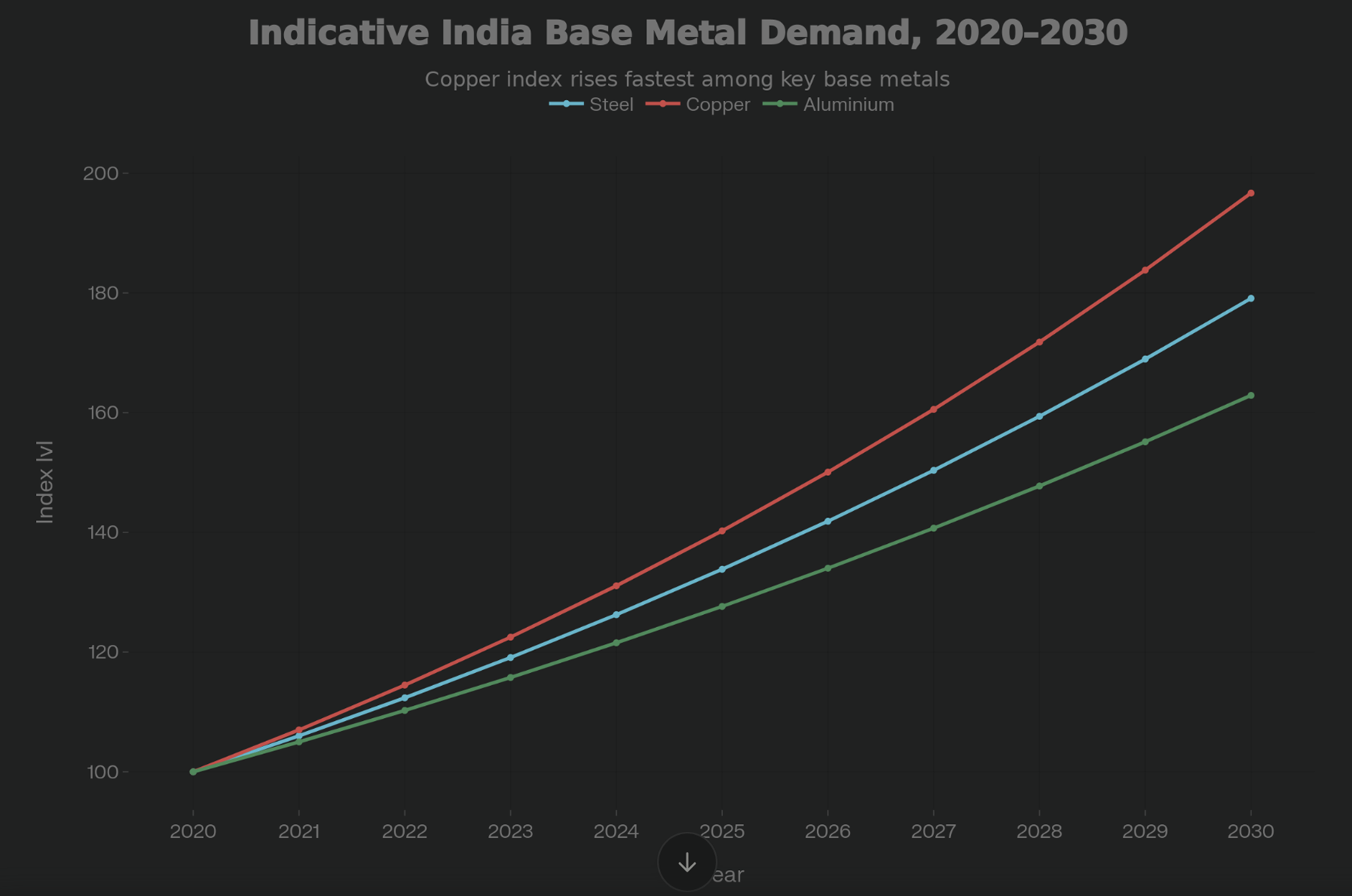
Copper proves to be a star performer once again next year. Comex copper moves sharply higher and reaches $7 a pound while LME copper eclipses $13,500/ton for the first time. Copper miners make new highs, led by the major producers. The world’s largest copper miner, BHP, finally makes new record highs well above $50.
In Asia, the bull market continues in Japan. Corporate reforms, improving governance, rising return on equity, buybacks and dividends, along with growing superannuation savings and capital repatriation, see Japanese investors warm up even further to the bull market that is occurring in their own backyard. Animal spirits stir once again, following the earlier multi-decade bear market.
Global investors also remain optimistic towards the “Land of the Rising Sun”. The Nikkei rises towards 60,000 while the TOPIX comfortably assails 3,700. The BOJ hikes interest rates at least one more time next year. The Japanese yield curve continues to steepen, and the JGB10yr rises well north of 2.25%. This remains a constructive environment for the banks and the TOPIX bank index, which advances nearly 20% to touch 600 for the first time in nearly 30 years.
The bull market continues in China/Hong Kong and other emerging markets, helped by looser financial conditions and a weaker US dollar. Other emerging markets do well, catching many investors out who remain underweight the asset class. Chinese property prices finally settle down and find a floor. The long road to recovery in China’s real estate finally commences. Meanwhile, China’s grip on global manufacturing strengthens with its market share rising. Consumers begin to open their wallets and spend more, boosting the domestic economy. The CSI300 rises at least 20% to touch the 5,400 level during the year. The rise in stock prices boosts confidence and consumer sentiment.
The Hang Seng Tech index is a leading benchmark once again in Asian markets, touching 8,000 in 2026 with gains of circa +40%. Major technology stocks evolve rapidly with AI-driven earnings growth. China’s hyper-scalers are increasingly rerated on prospects for growing earnings, as well as being seen as still cheaply valued compared to many global peers. Consumer discretionary stocks also do better, with more confidence and domestic consumption. China makes significant inroads to close the technology gap with the US. China has big advances in chip technology, AI software and humanoid and manufacturing robotics and widens its lead in global manufacturing.
That comprises our Baker’s Dozen for next year. Let’s see how the crystal ball goes in 2026. We sincerely hope for a more peaceful year in 2026. On behalf of the Fat Prophets team, I wish all our members and investors a very merry Xmas and festive season, and if driving long distances, please stay safe on the roads.
All the very best,
Angus, Patrick and the Fat Prophets team.
Disclosure: Fat Prophets and its affiliates, officers, directors, and employees may hold an interest in the securities or other financial products relating to any company or issuer discussed in this report. Fat Prophet’s disclosure of interest related to Investment Recommendations can be provided upon request to members@fatprophets.com.au.
ASX- Listed Australian stocks:
A1M, AAC, ABX, ABY, ADI.AU, AKE, ALK, AMC, AMI, ANN, ANZ, APA, ARB, ASM, AZS, BFC, BFC.AU, BHP, BKL, BLD, BOQ, BUB, BWP, CAT, CHC.AU, CHN.AX, CKF, CNR, COF.AX, CQE.AU, CSL, DHG, DMP, DXS.AU, ECF.AX, EHE.AUX, ELD, ENN.AX, ESS, EVN.AU, FAL, FATP.AX, FID, FMG, FPC.AU, FPP, GBS, GOLD, GOR.AU, GPT.AU, HUB, IDX, IGO, IPL, JHC.AX, JHX, KRR, MCR, MPL, NAB, NCM.AU, NEC, NML, NSR.AU, NST.AX, NUF, NXM, ORA, ORI, PAN, PAR.AU, PPS, PRN, QAN, QBE, RED, RIO, RXL, S32, SBM, SCG.AU, SCG-2, SFR, SGP, SHL, SLR, SRG, SRV.AU, SSPG-2, SSR, STO, SUN, SVY, TLS, TPG, TRS, TWE, VCX, WBC, WDS, WHC, X64, PDN, GNC, MGR, TYR, ATOM, 29M, RRL.AU, STO.AX, WDS.AX & GMD.AX
International stocks:
3382, 3690, 5930, 6506, 6954, 8058, 9432, 1128.HKE, 1818.HKE, 1821.HK, 1876.HKE, 1928.HKE, 1972.HKE, 2282.HKE, 2840.HKE, 2883.HKE, 3289.TKS, 3690.HKE, 388.HKE, 435.HK, 5929.TKS, 6367.TKS, 6481.TKS, 6758.TKS, 683.HKE, 69.HKE, 700.HKE, 7167.TKS, 7186.TKS, 7974.TKS, 823.HK, 8306.JP, 8316.JP, 8331.T, 8411.T, 8604.TKS, 8604-2, 8801.JP, 8804.TKS, 9684.TKS, AAL, AAPL.NAS, ABX.TSX, ACA.PAR, AIR, AMH.NYS, AMS, AMS.MAD, ANGPY, ANTO, APF, ARF, AT1.ETR, ATVI, ATYM, AUTO.LSE, AV, AVB.US, BA, BABA.NYS, BAC, BARC, BBOX.LSE, BGFD, BHP.NYS, BHR.NYS, BIDU.NAS, BKIA, BMW, BN, BNP.PAR, BP, BT.A, BXP.NYS, C, CAST.SE, CAT, CCH, CCL.LSE, CDE.NYS, CDE.US, CEY, CHL, COL.ES, CQR, CSCO, CSGN, CUZ.NYS, CVO.PA, DGE, DHC, DHI, DIS, DIS.NYS, DLR.NYS, DOM.LSE, ECMPA.AMS, ENAV-uk, ENTRA.OSL, ENX.PAR, EQIX, ESS.US, EXR.NYS, EZJ, FDX, FRES.LSE, G24, GDX.LSE, GDXJ.LSE, GDXJ.US, GEMD, GLD.ARC, GLEN, GOCO, GOLD.NYS, GOOG, GRG, GSK, HDB, HEIA.AMS, HL, HLT.NYS, HMY, HMY.NYS, HSW, HUFV.SE, IAG, IBN, IMG, IMPUY, ITRK, ITV, JHX.NYS, JP.8308, KGC, KIM.US, KNEBV.HEL, KWS, LEG.ETR, LEN, LGEN, LLOY, LRE, LSE, LVMH, MC.PAR, MCRO, MCRO.LSE, MKS, MOL, MONY, MRL.ES, MTN.NYS, NEM, NG, NSR, NWH.U.CA, NWH.UN.TSX, OXY, PETS, PG, PHE, PHE.LSE, PLATJPN, PLD.US, PLEF, PLG.CA, POLY, PPH, PSA.NYS, PZC, RB, REL, RELX, RI, RIGD, RIGD.LSI, RING, RMV.LSE, RNK, RR, SGE, SGRO.GB, SHEL, SIL, SKT, SKT.US, SLP, SMDS, SMI, SMSN.LSI, SN, SNE, SPG.US, SPK, SRC.US, STAY.NAS, SYY, TGYM, TJX.NYS, TME, TRNO.US, TSM, TTWO, TWR, UBER, ULVR, UMH.NYS, VER, VNO.NYS, VOD, VOW, VTR.US, WELL.K, WMG.NAS, WYNN, XERI.PK, XOM, YTRA, YUMC, ZG.NAS, URA, HEM.SE, 9888.CN, 9988.HK, 7163.JP, CDE.US, GENI.GB, PDN.AX, RIOT.US & ZG.US
